The trip to the macaw clay lick in Tambopata is one of the most exciting experiences in the Peruvian Amazon. At dawn, you navigate jungle rivers to witness a unique natural spectacle: hundreds of macaws descending onto clay cliffs. This adventure is ideal for families and nature lovers, combining wildlife observation in the tropical rainforest. Here we explain what macaw watching and wildlife observation in Tambopata consist of.
What is the macaw clay lick in Tambopata?
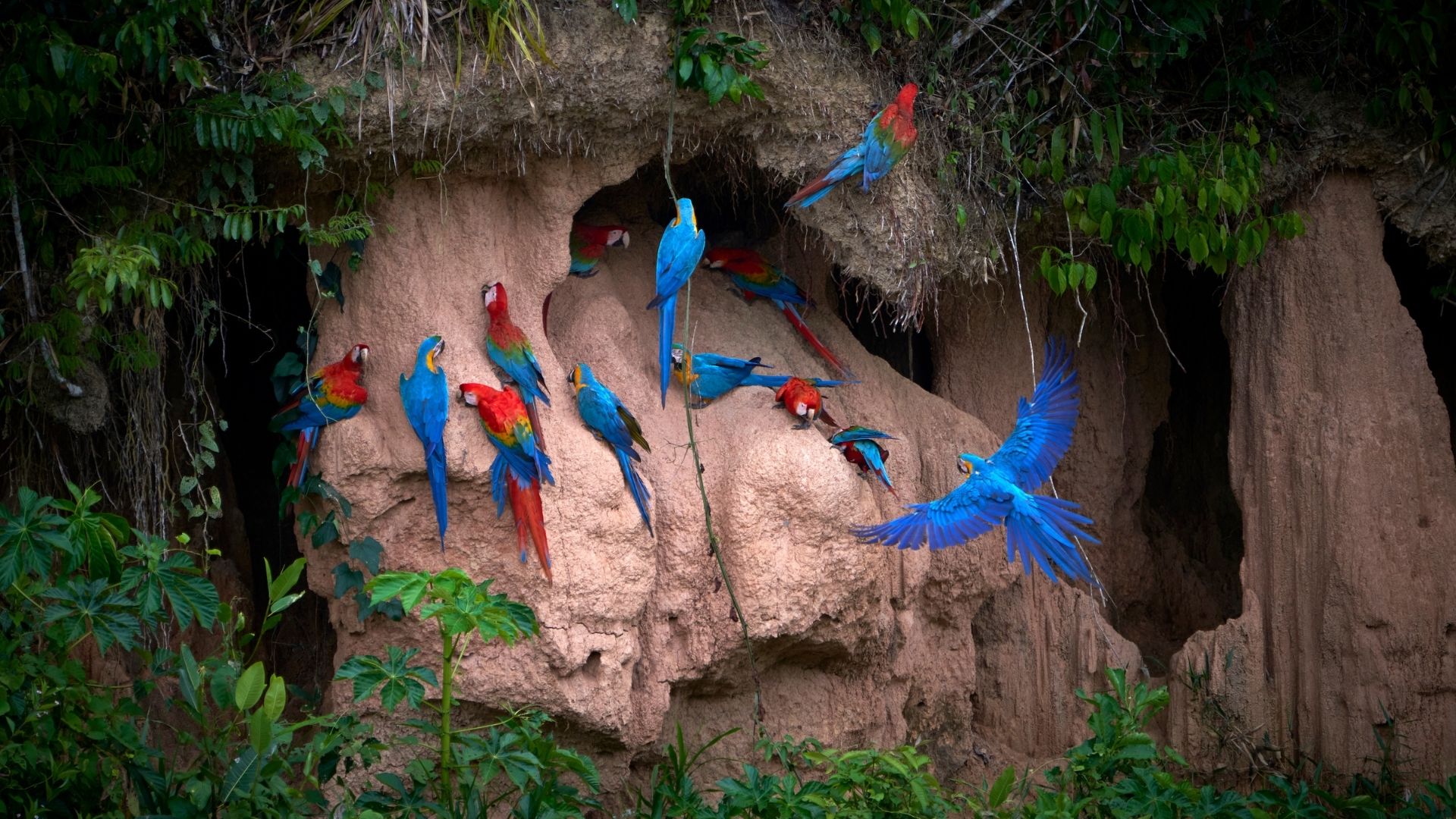
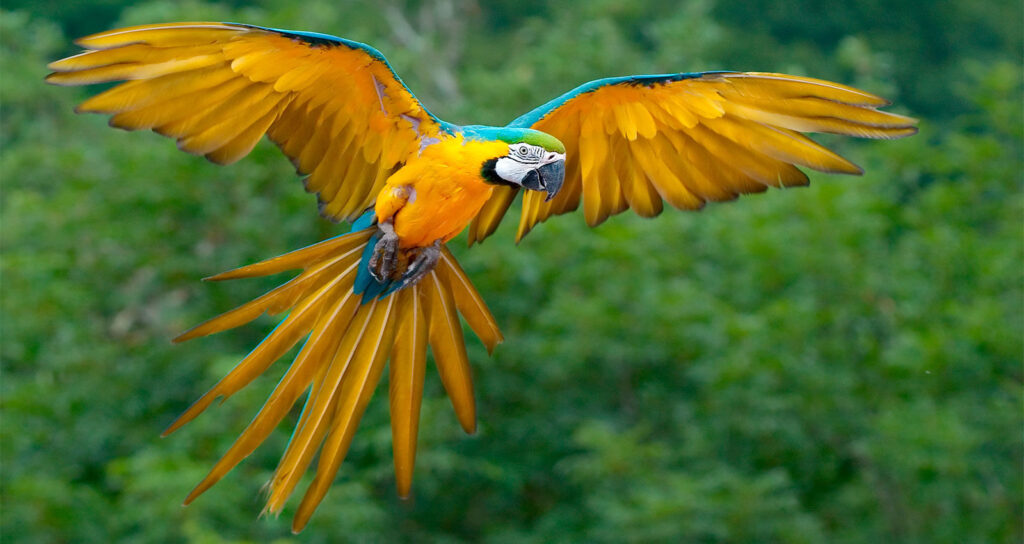
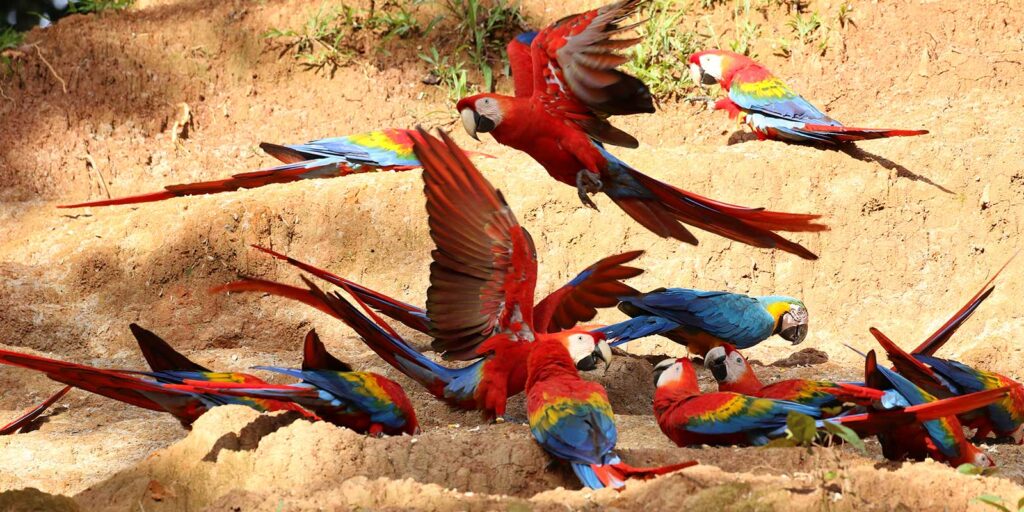
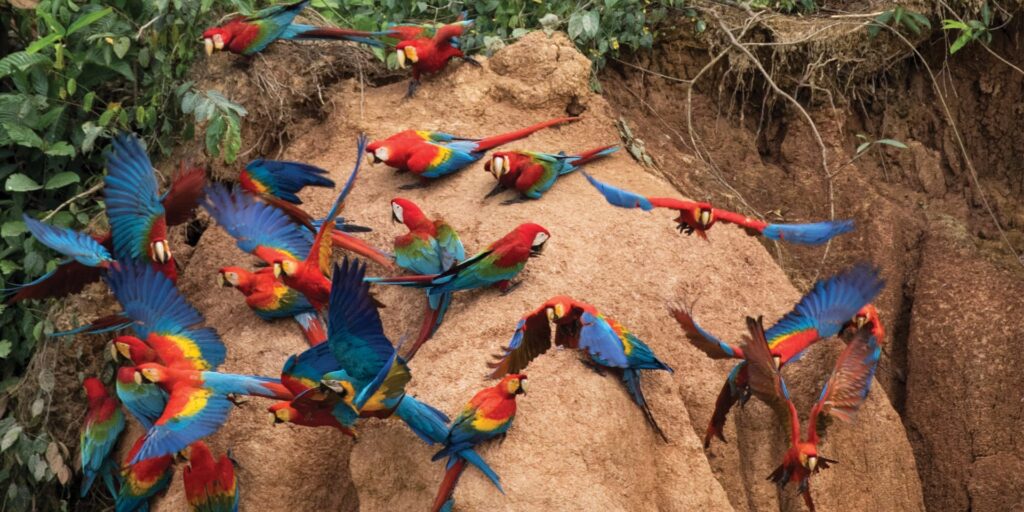
The macaw clay lick is a natural deposit of clay on the riverbank where parrots, parakeets, and macaws gather every morning to feed. Here, hundreds of these birds consume mineral-rich soil as part of their diet. This special clay helps them neutralize toxins they ingest from certain jungle fruits. The result is a stunning spectacle: a multitude of scarlet, blue-and-yellow macaws, along with other species of parrots and parakeets, crowding onto a muddy cliff at dawn. Watching them flutter in noisy, colorful flocks is one of the most iconic birdwatching events in the Amazon. In short, the clay lick is a natural “clay feeder” for these birds, and visiting it offers a unique wildlife spectacle.
Where is the macaw clay lick and how to get there?
The Chuncho Clay Lick, the most famous in Tambopata, is located in Upper Tambopata within the Tambopata National Reserve (Madre de Dios, Peru). This remote location lies on the banks of the Tambopata River, near Puerto Maldonado. To get there, it is typical to depart before dawn from Puerto Maldonado. By land, you travel about 48 km (around 2 hours) to the river, then continue upstream by boat for approximately 5 to 6 hours until reaching the Upper Tambopata area. Upon arrival, guides take the group to a special viewing platform (hide) facing the clay cliff. There, you can sit quietly and observe how the macaws come to feed without disturbing them, from a safe distance. This combined car and boat journey, although long, is worth it for the richness of the jungle landscape you pass through and the impressive final destination.
Tours to the macaw clay lick in Tambopata
In Tambopata there are different tours to the macaw clay lick for all tastes. The most popular are:
- 1-day excursion (full day): Ideal if you have little time. It usually departs before 5 a.m. from Puerto Maldonado, with a car transfer to the river, then navigation to Upper Tambopata. At dawn at the clay lick, you will see the arrival of multicolored macaws. After breakfast in the jungle, the tour usually includes another hike (for example to a canopy observation tower) or a relaxed return by boat.
- 3 to 5-day package: Combines clay lick observation with more activities. For example, many packages include a visit to the famous Sandoval Lake to see caimans, otters, and monkeys swimming, guided jungle walks, and even a night in an eco-lodge. These tours offer a complete Tambopata experience: hiking, night walks to see animals with a flashlight, and perhaps a climb to a canopy tower in the high jungle. In all cases, the guides are professional bilingual experts who know the authorized routes in the reserve. At the end of the tour, you return to Puerto Maldonado, where the adventure ends.
In any type of tour, the idea of sustainable tourism is reinforced—you support the care of the Reserve and learn about the importance of conserving these fragile ecosystems.
Best time to see macaws in Tambopata
The dry season, from May to October, is the best time for a trip to the macaw clay lick in Tambopata. During these months there is less rain, the rivers are navigable, and the mornings are usually clear. This favors macaws descending in large numbers to the clay lick. In fact, every morning during the dry season, hundreds of birds gather at the cliff as soon as the sun rises.
In the rainy season (November to April), macaws can also be seen, but their numbers are usually lower and excursions may be affected by bad weather. In any case, guides always choose a day with favorable weather to ensure the sighting.
What to bring on a trip to the macaw clay lick in Tambopata
To comfortably enjoy your trip to the macaw clay lick, prepare the following:
- Comfortable long-sleeved clothing: Lightweight cotton shirts and pants (or breathable fabrics) to protect your skin from mosquitoes.
- Insect repellent and sunscreen: Essential in the jungle.
- Rubber boots or sturdy sneakers: The trail may be wet or muddy.
- Hat or cap and sunglasses: To protect you from the morning sun.
- Camera or binoculars: So you can capture details of macaws and other birds from a distance.
- Light rain jacket or poncho: In case of light rain.
- Water and light snacks: Although many tours include drinks and fruit, it’s always good to bring a bottle of water and an extra snack for the walk.
These tips are aligned with the official recommendations of SERNANP, which remind visitors to bring appropriate clothing, repellent, and sun protection.
Wildlife observation in Tambopata
Tambopata is one of the most biodiverse places in the world. It is home to more than 600 species of birds and 200 species of mammals. In addition to colorful macaws, you can see giant capybaras strolling along the river, howler monkeys in the treetops and giant otters swimming in lagoons. It is also possible to spot parrots, toucans, and even birds of prey such as the harpy eagle. At night, some excursions allow you to search for caimans or exotic insects with a flashlight. With luck, and always with an expert guide, you might even observe jaguars or tapirs along the riverbank. In fact, jaguars occasionally swim in the rivers of the national reserve. All these encounters make the trip to the macaw clay lick in Tambopata an unforgettable experience of contact with wild nature.
Contact us and book your trip to the macaw clay lick with us to experience this Amazon adventure.