If you are looking for the greatest adventure of your life, this guide to traveling to Manu National Park is your first step into the heart of the Peruvian Amazon. Waking up in the middle of a symphony of thousands of birds, observing jaguars resting along riverbanks, and walking beneath towering trees. You will discover why we are the best travel agency to accompany you on this expedition and how you can prepare for a journey that will change the way you see the world.
Where is Manu National Park located?
The Manu National Park is located in southeastern Peru. It extends across two very important regions: Cusco and Madre de Dios. The park begins in the high Andes mountains, at around 4,000 meters above sea level, and descends dramatically to the Amazonian plains, located at just 300 meters in elevation.
Due to its importance for life on the planet, UNESCO declared it a Natural World Heritage Site in 1987. It is located specifically in the provinces of Paucartambo (Cusco) and Manu (Madre de Dios), protecting the entire Manu River basin.
How to get there from Cusco
The most famous and recommended route is the journey by land and river, which offers an astonishing visual transition from snow-capped peaks to dense jungle. The trip begins departing from Cusco very early in the morning in specialized vehicles, usually 4×4 trucks or minibuses prepared for mountain roads. The first major landmark is the colonial town of Paucartambo, famous for its stone bridge and traditions.
After Paucartambo, the road climbs to the Acjanaco pass, located at about 3,560 meters in elevation. This place is the official gateway to the park and offers a breathtaking panoramic view: from here you can see how clouds collide with the green mountains, marking the beginning of the famous Cloud Forest. From this point on, a winding descent toward the low jungle begins. The road journey usually lasts between 8 and 10 hours until reaching small ports such as Atalaya or towns like Pilcopata. Once at the port, the adventure continues in motorized boats that navigate along the Alto Madre de Dios River toward the different lodges.
| Travel Stage | Type of Transportation | Approximate Duration | Arrival Altitude |
| Cusco – Paucartambo | Land vehicle | 3 – 4 hours | 2,900 masl |
| Paucartambo – Acjanaco | Land vehicle | 1 – 2 hours | 3,560 masl |
| Acjanaco – San Pedro | Land vehicle | 2 – 3 hours | 1,500 masl |
| San Pedro – Pilcopata | Land vehicle | 2 hours | 700 masl |
| Atalaya – Lodge | Motorized boat | 2 – 6 hours | 300 masl |
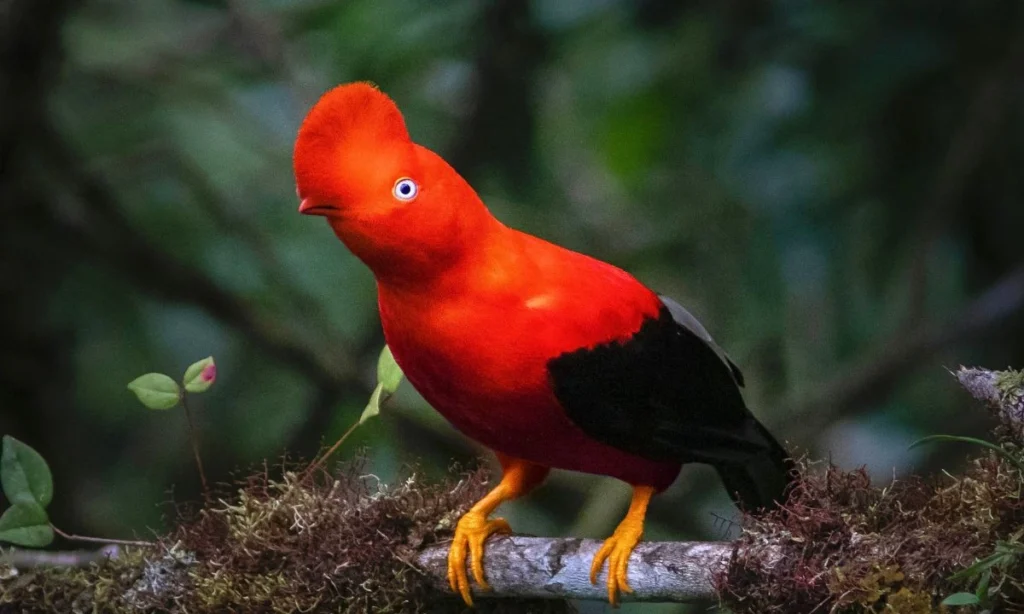
There is a faster alternative that consists of taking a flight from Cusco to the city of Puerto Maldonado. The flight lasts only about 45 minutes. From the Puerto Maldonado airport, you travel by road to the Madre de Dios River and then navigate by boat into the interior of the park. Although this route is shorter, many travelers prefer the land route from Cusco because it allows you to enjoy sightings of the Andean cock-of-the-rock and woolly monkeys in the cloud forest during the descent.
What to see and do in Manu National Park
Manu is such a diverse park that each day offers a new experience. To help you plan, this guide to traveling to Manu National Park highlights the most exciting activities you can do:
- Cock-of-the-Rock Observation: In the cloud forest of San Pedro, you can visit special platforms to observe the courtship dance of this bright red bird, considered the national bird of Peru.
- Jaguar Spotting: During the dry season, jaguars often come out to the sandy beaches of the Manu River to rest and sunbathe.
- Cocha Salvador: It is one of the most beautiful lakes in the reserved zone. Here you can board a silent catamaran to observe the family of Giant River Otters, which swim and hunt together.
- Visit to Macaw Clay Licks: These clay walls attract hundreds of parrots and macaws that come to feed on the minerals from the soil.
- Night Walks to See Micro-Fauna: At night, with the help of flashlights, you can find glass frogs, giant stick insects, exotic spiders, and even snakes that only come out when the sun goes down.
- Observation Towers: Some lodges have metal towers that exceed 30 meters in height. Climbing to the top allows you to be above the treetops and observe birds of prey, toucans, and monkeys that live in the forest canopy.
- Native Communities: Visiting Matsiguenka families allows you to learn how they have lived in harmony with the jungle for centuries, learning about their bow hunting techniques and the use of medicinal plants.
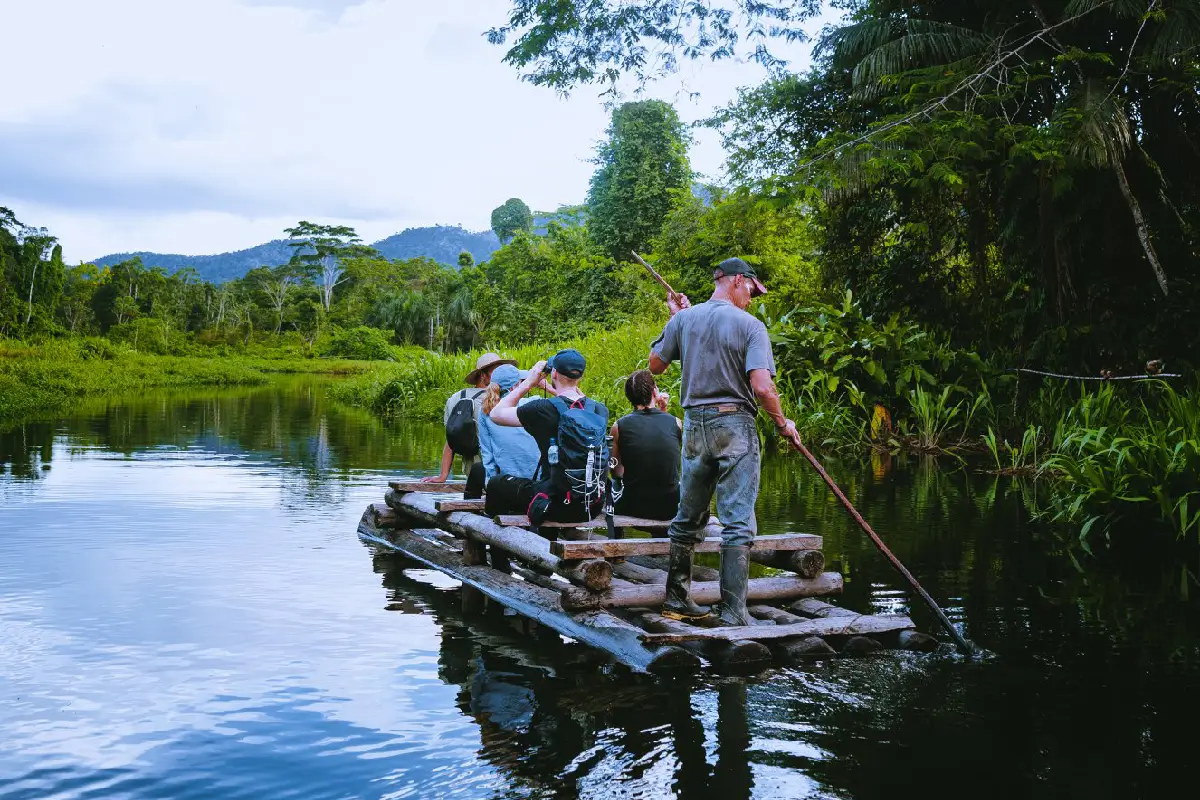
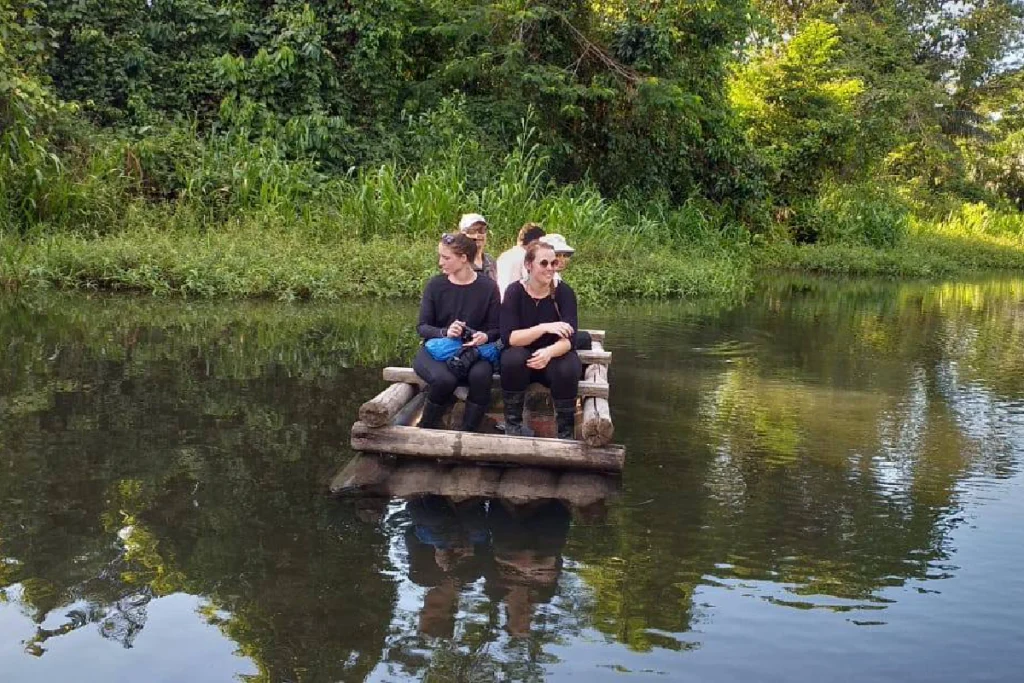
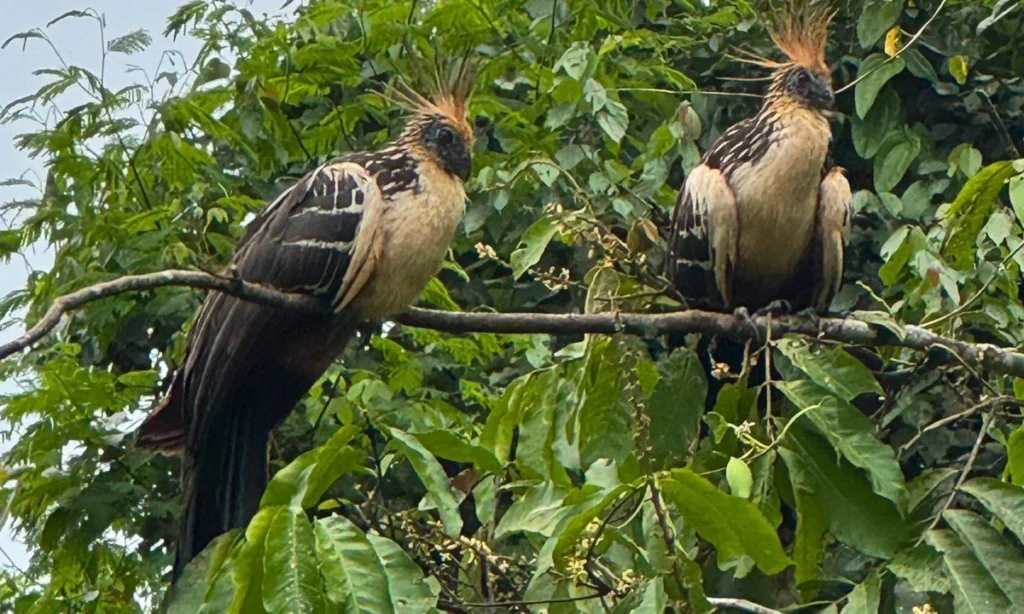
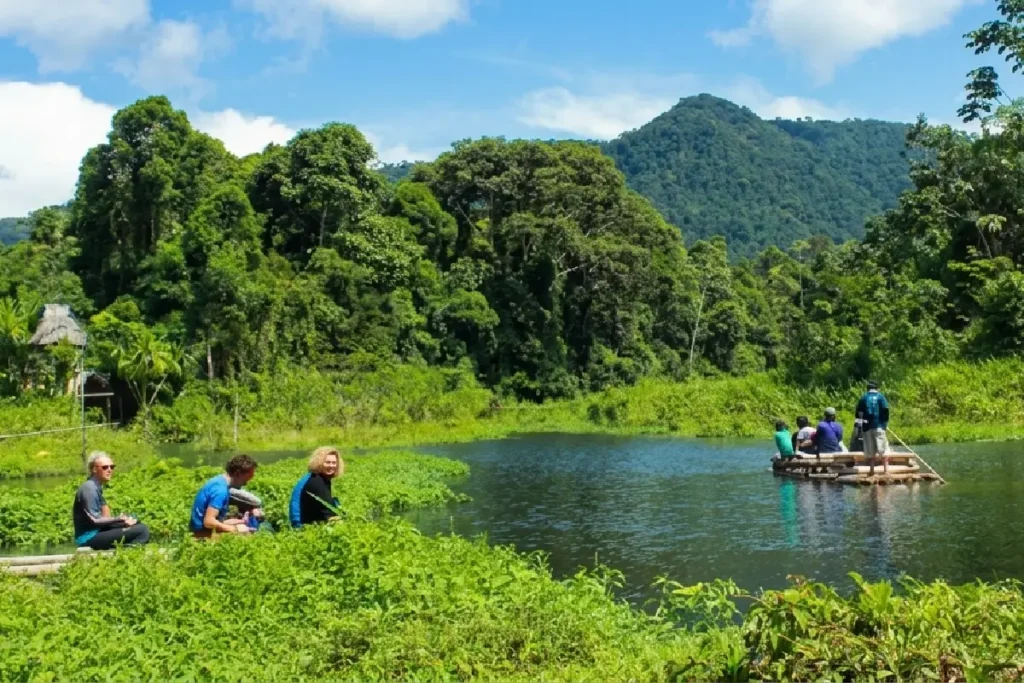
- Raft Rides on Lake Machuwasi: Located in the cultural zone, this lake is ideal for observing the hoatzin, a prehistoric bird, and capybaras (the largest rodent in the world) while navigating on traditional wooden rafts.
- Giant Trees: During walks through the high and low jungle, you will encounter Lupuna or Cedar trees that are hundreds of years old, with roots so large they resemble walls.
- Sunrise at Tres Cruces Viewpoint: If you travel between June and July, you can witness a unique optical phenomenon where the sun appears to split or multiply as it rises over the Amazonian horizon.
Requirements to Enter Manu National Park
To visit this wildlife sanctuary, it is necessary to comply with certain regulations established by the Peruvian government through SERNANP. These rules exist to protect both visitors and the incredible biodiversity of Manu National Park Peru.
The Cultural Zone has fewer restrictions and can be visited more easily, even on your own if you stay in nearby towns. However, the Reserved Zone (where the lakes and jaguars are located) requires hiring an authorized operator. These agencies manage entry permits, which have limited daily quotas to prevent overcrowding.
| Main Requirement | Important Detail |
| Passport or ID | It must be the original document and valid for at least 6 months. |
| Authorized Agency | Only operators with a valid contract with SERNANP can enter the reserved zone. |
| Yellow Fever Vaccine | Highly recommended and sometimes required by airlines. It must be applied 10 days in advance. |
| Travel Insurance | It is recommended to have coverage for medical evacuations and jungle adventure activities. |
| Plastic Restrictions | The entry of plastic bags and single-use disposable bottles is prohibited. |
Complying with these requirements to enter Manu National Park ensures that this place continues to be the most intact ecosystem on the planet for future generations.
Tours to Manu National Park from Cusco
Most travelers choose tours to Manu from Cusco because it is the safest and most efficient way to explore the Amazon. These packages are designed to maximize your chances of seeing wildlife while providing comfort in a wild environment. There are different types of expeditions, from 3-day tours that focus on the cloud forest and the cultural zone, to 8-day expeditions that go deep into the Manu River reserved zone.
When looking for a tour to Manu National Park from Cusco, you should pay attention to the itinerary. A typical 4- or 5-day trip will allow you to experience the cloud forest, navigate the Alto Madre de Dios River, and walk along trails full of wildlife. Remember that we are the best travel agency and our itineraries are optimized to avoid long waiting times and ensure that every walk is an opportunity for discovery.
What a tour to Manu National Park includes
When booking a tour package, it is important to know which services are guaranteed so you do not have unexpected expenses. Manu tour packages are usually “all-inclusive” because in the jungle there are no shops or restaurants where you can buy things on your own. These are the standard components of a quality service:
- Multimodal Transportation: Pickup from your hotel in Cusco, ground transportation in private vehicles, and river transport in boats with outboard motors and protective roofs.
- Accommodation in Eco-Lodges: Stay in lodges built with local materials featuring comfortable beds, mosquito nets, and clean bathrooms. Many use solar energy to charge electronic devices at night.
- Full Meals: Three daily meals (breakfast, lunch, and dinner) prepared by chefs who travel with the group, adapting to vegetarian or allergy-friendly diets. Snacks and unlimited mineral water are also included.
- Professional Naturalist Guide: A bilingual expert who will accompany you on every activity, equipped with high-powered telescopes and binoculars so you do not miss any detail.
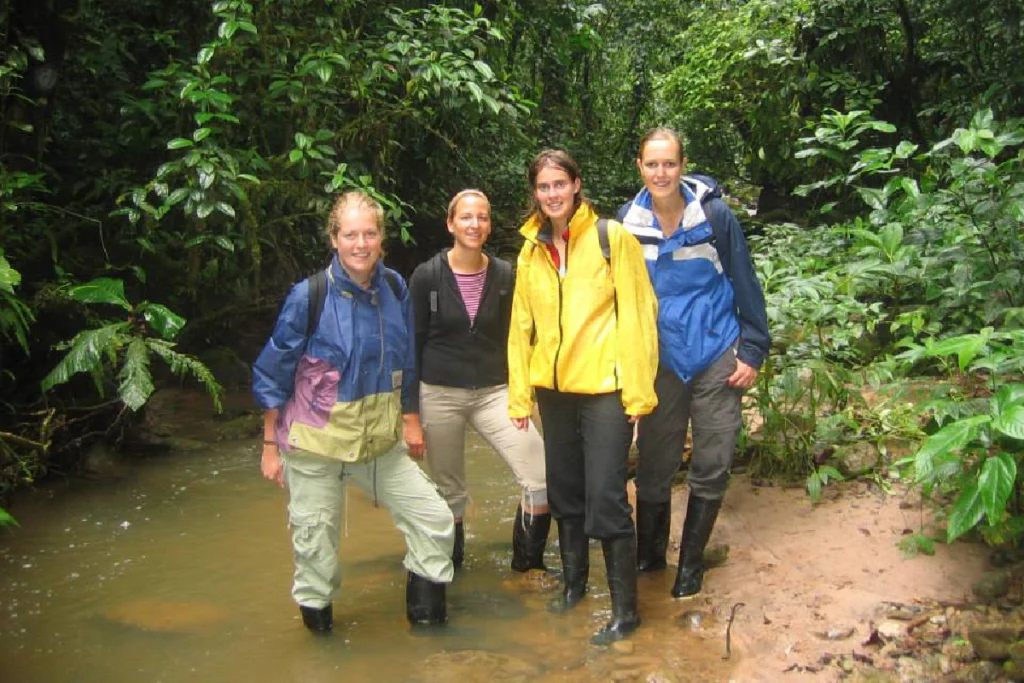
- Field Equipment: Loan of rubber boots (essential for walking in jungle mud) and a complete first aid kit with anti-venom serum.
Best Time to Travel to Manu National Park
Understanding the climate is vital to enjoying your adventure. Manu is a humid tropical rainforest, which means it can rain at any time of the year, but there are two well-defined seasons that change the logistics of the trip.
The best time to travel to Manu Peru is undoubtedly during the dry season, which runs from May to October. During this time, days are sunny and temperatures are warm, ranging between 25°C and 32°C. The most important aspect of this season is that river levels drop, exposing sandy beaches where animals (such as jaguars and caimans) come out to rest, greatly facilitating wildlife observation. With this guide to traveling to Manu National Park, you will have no problem choosing the best dates according to your type of experience, whether prioritizing wildlife spotting, enjoying more accessible landscapes, or experiencing the jungle at its fullest during the rainy season.
| Month | Season | Weather and Recommendations |
| May – September | Dry | Best time. Ideal for observing jaguars and otters. Accessible trails. |
| June – August | Cold fronts | Sudden drops in temperature may occur (down to 10°C) due to winds from Patagonia. |
| October – November | Transition | Mixed weather. Good for birdwatching and flowers beginning to bloom. |
| December – April | Rainy | Heavy rain. Rivers rise and navigation is faster, but spotting animals is more difficult. |
Frequently Asked Questions
How many days are needed to visit Manu?
For a complete experience that includes the reserved zone and a high probability of seeing large wildlife, we recommend at least 5 to 7 days. Tours of 3 or 4 days are excellent if you have limited time and want to explore the cloud forest and the cultural zone, but they usually do not reach the areas where jaguars live.
Is it safe to travel to Manu regarding diseases?
Yes, it is safe if you take proper precautions. The yellow fever vaccine is recommended at least 10 days before the trip. The risk of malaria is extremely low in the tourist areas of Manu, but it is always good to use repellent to avoid mosquito bites that may transmit other nuisances.
Can I travel alone to Manu National Park?
You can travel on your own to the Cultural Zone (towns like Pilcopata or Atalaya) using public transportation from Cusco. However, to enter the National Park itself and the Reserved Zone, Peruvian law requires that you go with an authorized agency and a professional guide.
Every corner of Manu National Park tells a story of survival and beauty that you will not find anywhere else. Now that you have all the necessary information thanks to this guide to traveling to Manu National Park, all that remains is to take the final step toward adventure. Contact us and book your tour with us.