
Exploring the Manu National Park is a true adventure in the Peruvian Amazon rainforest. This expedition to Manu National Park allows you to discover a natural paradise declared a World Heritage Site. Just imagining it will make you feel like you are inside a nature documentary: winding rivers, cloud forests, and exotic animals at every step. Manu, as locals call it, is famous for its unparalleled biodiversity and its atmosphere of adventure, ideal for curious travelers from all over the world seeking an unforgettable experience.
Biodiversity of Manu National Park
Manu National Park is home to more than 1,030 species of birds, 228 mammals, and 750 orchids. Among its inhabitants are scarlet macaws, Andean cock-of-the-rocks, pumas, monkeys, spectacled bears, jaguars, tapirs, and giant otters. Observing wildlife is a fundamental part of the expedition to Manu National Park: macaw clay licks, river turtles, black caimans, and brightly colored butterflies are part of the natural spectacle. Every trail and river offers fascinating discoveries for all adventurers.

Location and How to Get There for an Expedition to Manu National Park
Manu is located in the southeastern region of Peru, between the Andes and the Amazon. Tours usually begin from Cusco, combining road travel and Amazon river routes. Accessing the sectors of Manu requires operators authorized by SERNANP, ensuring that logistics and permits are in order. This journey allows you to enjoy landscapes that range from the mountain range to the lowland jungle, making the expedition to Manu National Park an epic journey.
Best Time for the Expedition
The dry season, from April to November, is ideal for visiting Manu. During these months, animals gather near rivers and lagoons, increasing opportunities for wildlife sightings. The rainy season (December–March) can make navigation and trails more difficult, although it offers a greener landscape full of flowers. Planning your expedition to Manu National Park during the dry season maximizes the experience and safety.
Experiences and Activities in Manu National Park
- Sunrise at Tres Cruces: Spectacular views over the Andean sea of clouds.
- Hiking in the cloud forest: Explore misty forests and observe exotic birds.
- River and oxbow lake navigation: Encounter turtles, caimans, and river otters.
- Birdwatching: More than a thousand species, including macaws and parrots.
- Wildlife observation: Monkeys, sloths, tapirs, and more.
- Visit to macaw clay licks: A spectacle of birds feeding on clay from rocky walls.
- Life in camps and lodges: Experience the jungle at night.
- Night safari: Discover caimans and amphibians during nighttime excursions.
- Photography of flora and landscapes: Capture orchids, heliconias, and waterfalls.
- Cultural encounter: Learn about native communities and medicinal plants.
Each activity ensures that your expedition to Manu National Park combines adventure, nature, and learning.
Advantages of Taking a Tour to Manu
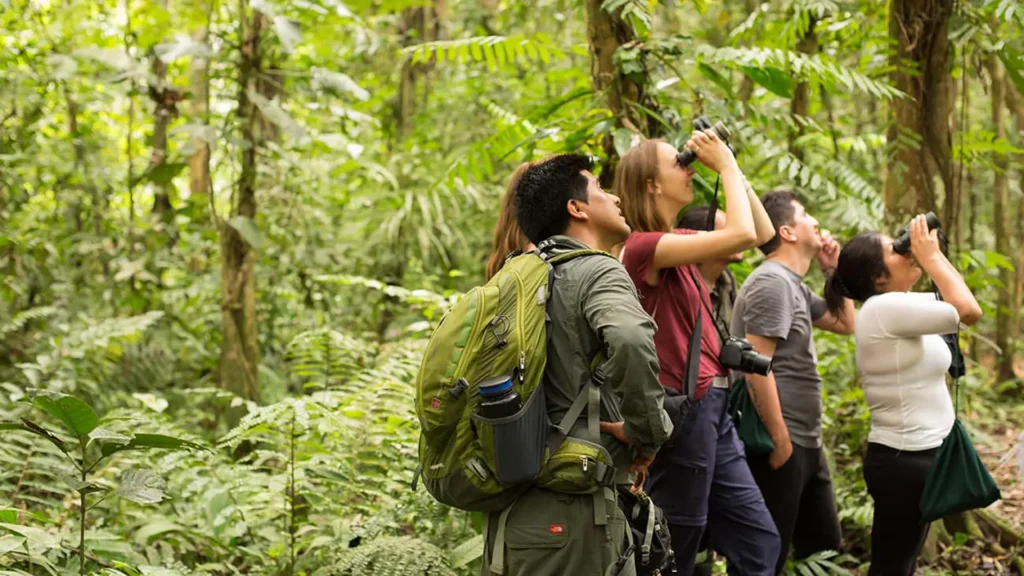
Taking a tour to Manu National Park offers many practical advantages. Traveling with expert guides guarantees safety and an enriching experience: they know the best places to see animals and ensure everything is done responsibly.
Other important advantages include:
- Complete logistics: Includes transportation, accommodation, meals, and permits; you just enjoy the experience.
- Specialized guides: Biologists or naturalists accompany the trip, explaining nature and pointing out birds and animals that are difficult to spot on your own.
- Comfort and safety: You don’t need to worry about heavy equipment or complex itineraries; basic gear and first aid are provided.
- Educational experience: You learn about biodiversity through guided interpretation, making the trip more enriching.
- Conservation and community: By participating, you support conservation efforts and local communities that provide tourism services.
The expedition maximizes your chances of wildlife sightings and makes the trip much easier and safer, ensuring every experience is memorable and well organized.
Frequently Asked Questions About Manu
1. Do I need an authorized guide to visit Manu?
Yes. Manu National Park can only be visited with tour operators authorized by SERNANP. For safety and conservation reasons, entering on your own is prohibited. A tour ensures that all permits are in order and that you have expert guides in the area.
2. How many days does a typical expedition last?
Most tours to Manu last between 4 and 6 days. This includes the journey from Cusco (by bus and boat) and enough time to explore the park. There are shorter 3-day options and longer ones (up to 7 nights) for adventurers who want to explore more deeply. Your choice will depend on your time and budget, but with 4–5 days you can already see the highlights.
3. What animals can be seen on the expedition?
Manu is famous for its wildlife. In rivers and lagoons, you will observe river otters (giant otters), turtles, and black caimans. In the forest, it is common to see monkeys (howler, spider, capuchin), deer, and exotic birds (toucans, hummingbirds, kingfishers). With luck, you might spot tapirs or even the elusive jaguar. Every day offers new surprises in fauna and flora.
4. Are Manu tours suitable for children or older adults?
Yes, many tours include families with children and travelers of all ages. The routes are usually moderate: there are both easy walks (short, flat trails) and longer excursions. The important thing is to wear appropriate clothing, follow the group’s pace, and take advantage of cabins or camps to rest.
To book your Expedition to Manu National Park, you usually look for an authorized operator online or through your travel agency. We make the entire process easy: we offer tours with expert guides and complete logistics. Contact us and book your tour with us, get ready for the jungle adventure of a lifetime in Manu!